
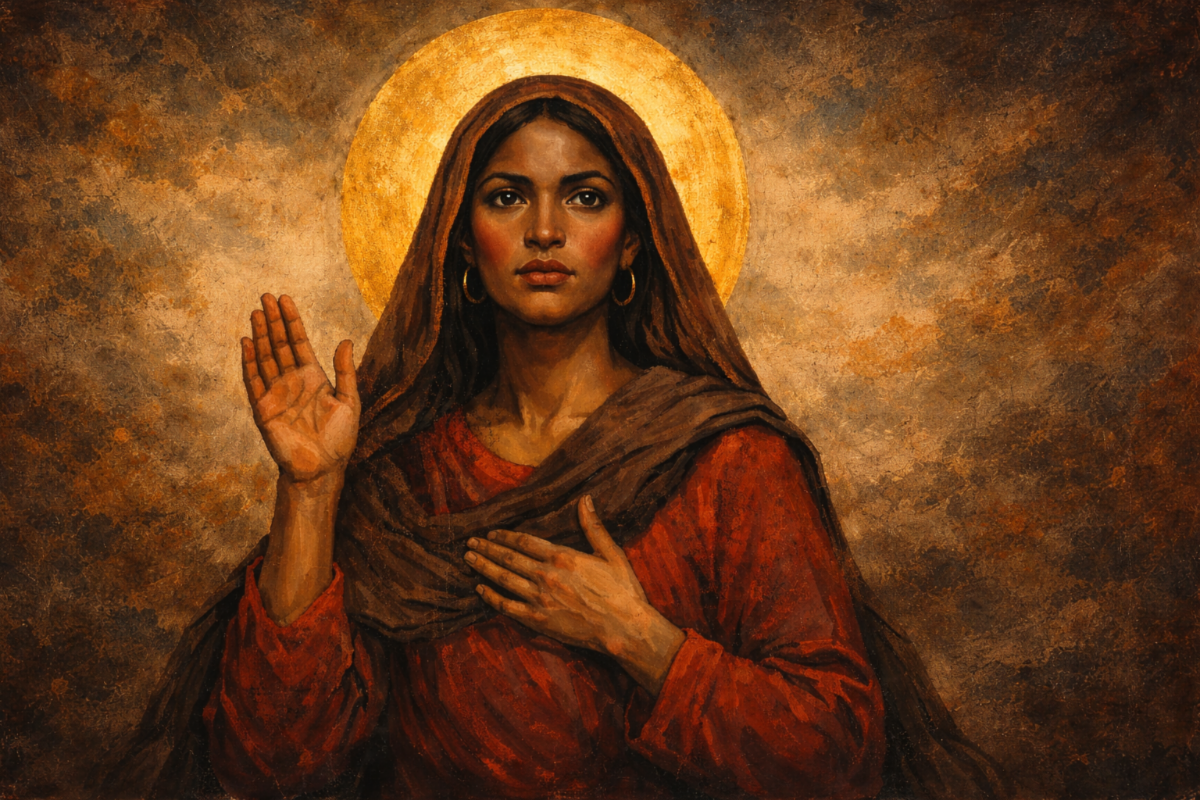
| When Mary sings the Magnificat in the Gospel of Luke, she is not offering a gentle lullaby or a private prayer of gratitude. She is proclaiming a revolution. “My soul magnifies You, O God,” she begins, and then she tells us exactly what that magnification looks like in the world: the proud scattered, the powerful brought down, the lowly lifted up, the hungry filled, and the rich sent away empty. This is not a promise of individual spiritual comfort alone. It is a declaration of collective liberation. Collective liberation rests on a foundational truth that many faith communities are only beginning to reclaim: no one is truly free until all are free. Mary’s song insists that salvation is not merely about personal righteousness or private redemption, but about the reordering of relationships, systems, and power itself. The Magnificat names what so many have experienced across history. When power is hoarded, suffering multiplies. When wealth accumulates at the top, hunger grows at the margins. When voices are silenced, fear and hate take root. Mary does not spiritualize these realities away. She names them, and she declares that God is already at work undoing them. What is especially striking is who sings this song. Mary is young, poor, colonized, and pregnant under conditions that put her at great risk. She does not speak from a place of safety or privilege or authority. And yet she dares to trust that God’s justice is not abstract or delayed. It is active, embodied, and communal. In Mary’s vision, liberation is never solitary. The hungry are filled together. The lowly are lifted together. The mighty are held accountable not through vengeance, but through the dismantling of unjust power. This is not about replacing one hierarchy with another; it’s about restoring the right relationship. For churches today, the Magnificat offers both comfort and invitation. It invites us to wonder together: Where do we see people being lifted up, and where are others still being overlooked? Whose voices are being centered in our life together, in our decisions, and whose experiences remain unheard? Whose hunger, in all its forms, remains unmet? And where might God be inviting us to loosen our grip on comfort in order to participate more fully in the work of justice, healing, and repair? Collective liberation does not mean guilt or shame. It means shared responsibility and shared hope. It means trusting that when we work toward justice for the most vulnerable, we are participating in God’s ongoing work of healing the whole world, including ourselves. Racism is one of the clearest examples of how broken systems harm everyone, although not equally. It wounds those who bear its daily weight most heavily, and it also distorts the hearts, imaginations, and spiritual lives of those who benefit from it. Racism separates people. Mary’s song refuses such divisions. In God’s economy, liberation is shared, and so is the work of dismantling what harms the beloved community. Mary’s song ends not with triumphalism, but with memory. “According to the promise God made… to Abraham and Sarah and to their descendants forever.” Liberation, she reminds us, is not a new idea. It is woven into the deepest promises of our faith. May we have the courage to sing this song with our voices, and with our lives. As a community, we are being invited to listen more deeply to this song of liberation and to consider what it asks of us now. Our upcoming in person/online retreat on January 24th will be one space where we can continue this work together, reflecting honestly on racism and other forms of oppression, the impacts, and the ways God may be calling us toward greater truth, repair, and shared freedom. This is not about having the right answers. It is about showing up with humility, courage, and trust that the God who lifts the lowly is still at work among us. |
 |
| Rev. Dr. Carol Kiesling Virtual Church Pastor |