

I hope this can be read with the greatest possible understanding, given the circumstances we have faced as a church. I come from Venezuela, the land where I was born and which I love, and I have lived in Houston, Texas, for more than 30 years. I have traveled to places such as Harlingen, Weslaco, Donna, Dallas, San Antonio, McAllen, and Austin, where I learned about their customs, culture, food, and expressions. Therefore, I write as both a Venezuelan and an American.
With love, I reflect first on myself before reflecting on the church. I arrived in 2016, Mark Brown invited me to sing, and I did so with great joy, but I did not stay because I worked seven days a week. By the end of 2016, there was a proposal to open a Spanish-language ministry. I heard the call but did not want to fully respond because I was focused on my work and the many conflicting matters and scenarios that such a proposal could bring into my life. It was not until late January 2017 that I agreed and spoke with Troy Thresh.
Then, after being invited to help form a Latino church, I was asked to choose a name, and I decided to call it La Casa de Todos – The Home for Everyone. On Thursday, May 4, 2017, at 7:00 p.m., the first gathering of La Casa de Todos began with a total of eleven people.
We began our work with great motivation, and over the following months. We organized ourselves as much as possible, including worship expressions and songs that would resonate with both Catholic and evangelical backgrounds. Many came with the expectation that MCC had opened a Spanish-language church, but although I knew my own faith and teaching background and had gone through seasons of absence, scarcity, and difficult trials, I still was not prepared for what would later come: disappointment. This came from not being Mexican, not being Catholic, and not speaking inclusive Spanish. Betrayal was taking shape around me, along with contempt from those who once embraced me.
Then came the harshest month: December 2017, with the first pastorela. But before that, in October 2017, I suffered a painful loss because of two La Casa de Todos members who accused me day and night through text messages, emails, and Facebook messages. They cloned my social media accounts and sent threats involving witchcraft, and even threats about putting things in my food, wishing for my death. They forced me to stay home for a time because I feared for my life, but the Lord gave me the courage to keep moving forward, and so I continued.
For me, every trial I have gone through during these years has been part of my spiritual formation and strengthening. With complete honesty, I did not know MCC or its leaders at the beginning. But something good happened through Rev. Vickey Gibbs, who called me and told me, “God has a calling on your life; prepare yourself.” She also helped me find a way to begin my master’s degree in Biblical Science, since I already had a degree in Biblical Studies.
Still, I continued to look into my heart and ask many questions: Why does our church not grow? Why do we not have a message that is sufficiently relevant for everyone? That is why I began researching and reflecting on why we are not growing as we desire, and in my case, why attendance has declined so much.
We are no longer living in the same era. Troy Perry founded this church on October 6, 1968, in California, and it was born with a very clear purpose for LGBTQ+ people. This purpose was highly relevant at that time, but today the context is different.
What we face today is very different. Inclusion is no longer a strong differentiator. What was once rare and necessary is now much more common. Many churches are more open now, and outside the church, there are even more inclusive spaces.
The question has changed: Do they accept me? And if they do, does this add anything else to my life? People are not only looking for a social position. Issues of justice and identity matter, but they do not necessarily generate spiritual commitment. They do not automatically build a deep community. If everything revolves around social concerns, it can feel more like activism than personal transformation.
There is a perceived lack of spiritual depth. Some people—not all—perceive that difficult topics are avoided or that the spiritual message is softened to avoid offending. That creates a reaction: “If I only want validation, I can find it elsewhere. Why come here?”
There is also distrust toward religion, even when it is inclusive, especially among LGBTQ+ people. Many carry wounds from religion and reject any “church” structure. Even if a space is safe, that rejection remains. It is not enough to be “open”; we also have to be clear.
Many inclusive communities fail in this area. In my opinion, the new era and progressive ideology fail to bring people to Christ because many people bring beliefs from other religions, including magic, witchcraft, and other practices that confuse, diminish, and distract from our Christian message.
One example is a person who attended my community and believed that Santa Muerte was the solution to all their problems. While they were with us, they spoke about Santa Muerte with other members, which led to conflict and people leaving the church.
Invocations to ancestors, apparently linked to African beliefs, ritual diversity in spiritual ceremonies, Babalawo, and Afro-Cuban religion, these things are not validated by God from a biblical point of view.
That is why it is necessary to clarify: What do we truly believe? What do we offer that changes lives?
In this sense, it is also important to remember that not everyone comes without problems. Many come from broken families, abuse, witchcraft, drugs, alcohol, domestic violence, and rejection.
According to Scripture, the gospel is for the despised, for those whom the world has rejected, including those rejected by the church itself (1 Corinthians 1:28). We are meant to be the option that raises them from the dead, from the situations in which they find themselves. But if we are the same and practice the same things, then what is the difference? If the message is ambiguous, people do not connect.
Our society has become so attached to activist messages, banners, and colored symbols that people now find them elsewhere. They are no longer unique. In another time, they were a novelty; now they are everywhere, and activists use them so much that it is difficult to know who truly stands for what.
We must look more carefully at the culture in which we live:
· There are a thousand ways to spend time.
· Spirituality is more individual.
· Institutional commitment has declined.
So the great question remains: What are we offering that someone cannot easily find somewhere else, and that truly changes life?
I conclude this reflection after taking time to ask myself these questions. I did not let others tell me how MCC works; instead, I took the time to visit MCC churches in Mexico, Brazil, and the UK. After visiting them, I concluded that they all have the same problems, and their limited influence in those cities and countries reflects the same issues mentioned above.
We are left with the challenge of strengthening our faith. I write this in the hope that everything I have lived through and the experiences I have had within the church will help us strengthen our faith, bring what we want to see clear in our church, and understand what is preventing us from achieving it.
In the midst of everything we have lived, I do not write from defeat, but from faith. If these years have taught me anything, it is that God continues to work even in the middle of imperfection, conflict, and uncertainty. La Casa de Todos was never meant to be just another gathering—it was born as a calling, as a space where people could truly encounter God and find transformation, not only acceptance.
Our future does not depend on returning to what once worked, but on courageously embracing what God is asking of us now. We have the opportunity to grow—not only in numbers, but in depth, in clarity, and in purpose. Growth will come as we strengthen our spiritual foundation, as we speak with honesty about what we believe, and as we offer something that goes beyond inclusion: a real encounter with Christ that restores lives.
La Casa de Todos can continue to become a true home, not just in name, but in essence. A home where people are not only welcomed, but discipled. A home where wounds are not only acknowledged but healed. A home where faith is not diluted, but lived with conviction, love, and truth.
For RMCC, this is also a moment of opportunity. We can grow by listening more deeply to one another, by supporting diverse expressions of faith while remaining grounded in a clear spiritual identity. Unity does not mean uniformity, but it does require direction. If we walk together with intention, humility, and courage, we can become a stronger, more relevant church for this generation.
I believe there is still real hope. Not based on strategies or programs, but on the power of God to renew, to restore, and to guide us forward. What began with eleven people can continue to grow if we are willing to be transformed first.
May we not be afraid to change. May we not be afraid to go deeper. And may La Casa de Todos truly become what its name declares: a home for everyone who is seeking not only a place to belong, but a life that is made new.
With faith and hope,
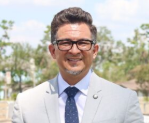
Rev. W. Ulises Perez